
Assess your decision architecture
As decision speed increases, governance failure rarely appears as a single event. It emerges gradually through escalation pressure, delayed ownership, defensive reviews and uncertainty in how authority operates under real conditions.
Use this self-review to identify where your decision system may be breaking down and where to focus first.
01
SIGNAL AND VISIBILITY
When issues emerge, can the organisation act?
Are risks identified earlier than decisions can be resolved?
Does visibility increase faster than accountability?
Are teams escalating because ownership boundaries are unclear?
Do review cycles multiply under pressure?
Does uncertainty persist despite increased operational insight?
Visibility without aligned authority increases coordination rather than control.
02

AUTHORITY & ESCALATION
Where does authority actually sit?
Can decisions be made where understanding exists?
Are escalation thresholds explicit?
Does authority move based on condition or hierarchy?
Are trade-offs resolved structurally or deferred across functions?
Does executive involvement increase as complexity grows?
Escalation is often a symptom of authority positioned too far from the signal.
03

GOVERNANCE UNDER PRESSURE
Does governance maintain coherence as pace increases?
Does governance create clarity or coordination overhead?
Are reviews designed around operating conditions or reporting cadence?
Does ownership persist across lifecycle stages?
Are assumptions visible across engineering, operations and commercial functions?
Does governance resolve uncertainty early or validate decisions late?
High-performing systems do not eliminate uncertainty; they structure how it is governed.
04

AI & ACCELERATED FEEDBACK
Can the organisation absorb accelerated feedback?
Has visibility improved faster than decision responsiveness?
Can governance operate at the speed AI now surfaces variance?
Are ownership boundaries clear where AI informs decisions?
Is human judgement deliberately positioned within the system?
Is escalation increasing as feedback cycles compress?
AI accelerates visibility; It does not automatically accelerate decision capability.
05

STRUCTURAL INTERPRETATION
What these patterns often indicate

Escalation increases as visibility improves
Authority may no longer align to where information appears.

Reviews multiply under pressure
The organisation may be compensating for unclear ownership.
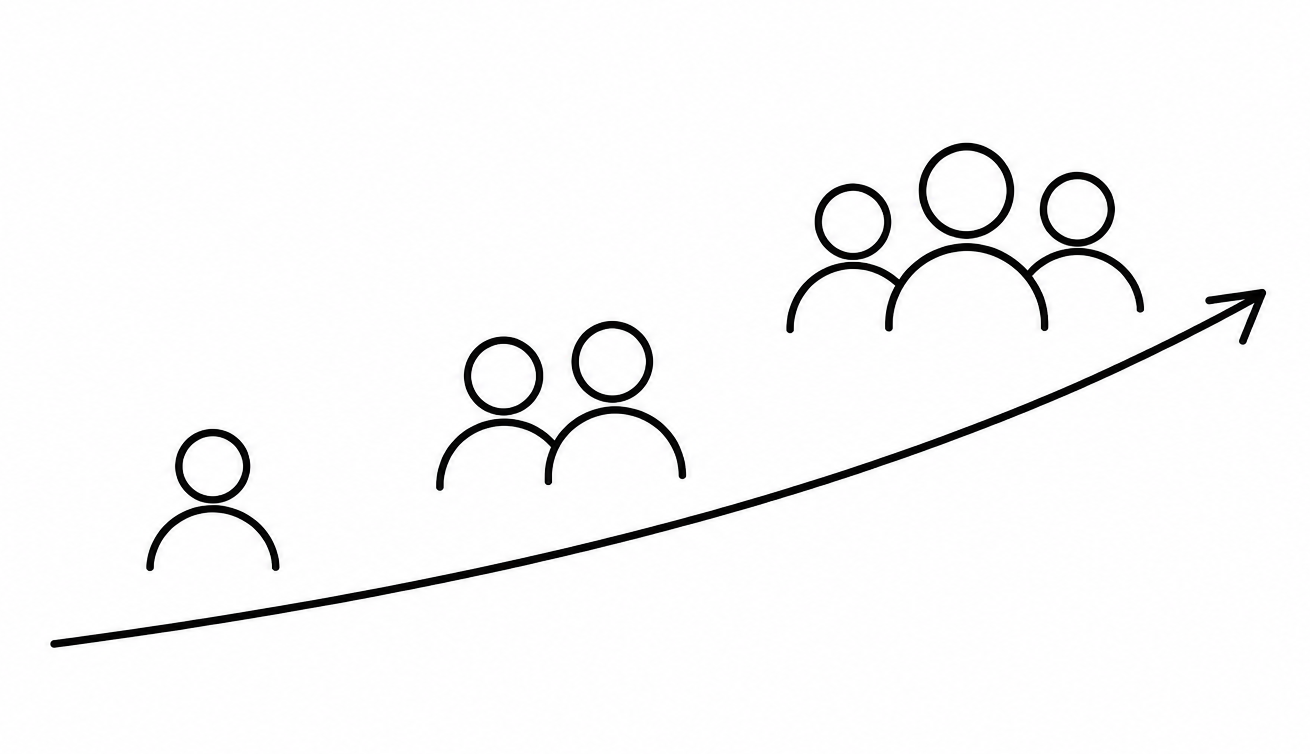
Executive involvement continues to expand
Decision rights may not scale with operational complexity.
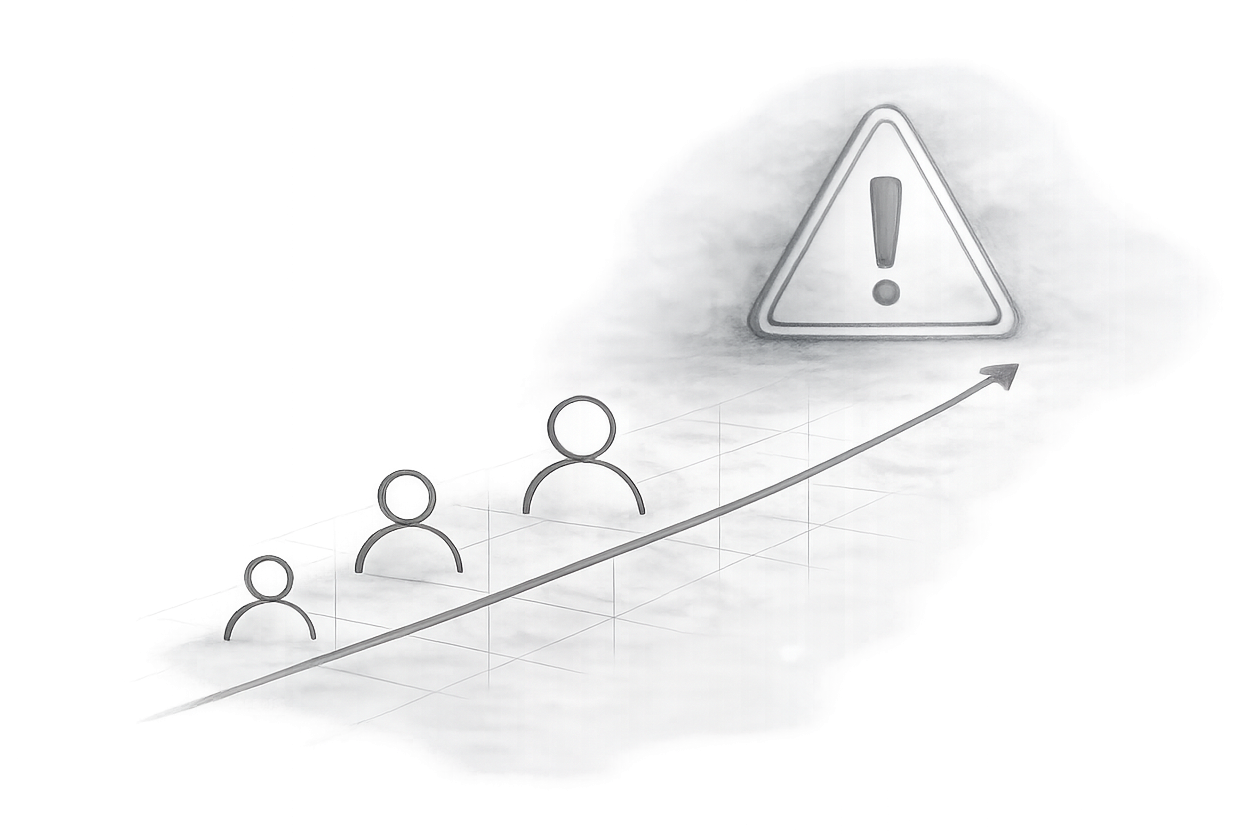
These patterns are rarely isolated. They reinforce each other and compound as complexity increases.
Risk appears late despite governance
The system may validate decisions after commitment rather than structure them before it.

Designing decision systems that hold under pressure
We work with boards and executive teams to structure governance, authority and escalation so decisions remain coherent as complexity, speed and consequence increase.
Confidential. No obligation. Executive-level discussion.